People ask me all the time how a guy who spent two decades slinging plates ends up writing a book about murderers. I usually laugh and say it’s not that different — you learn a lot about human nature watching people at their worst on a Saturday night rush. But the truth is longer than that, and it starts a lot earlier than my last restaurant job.
I was ten years old the first time I read about a real murder. Not in a book somebody handed me — I found it myself, tucked in the true crime section of the Doylestown library, wedged between the mysteries I was supposed to be reading and the encyclopedias nobody touched. I don’t remember the case anymore, not really. What I remember is the feeling. That this wasn’t a story somebody made up to scare me. This happened. There was a real person, and a real ending, and somebody had to go looking for the truth of it.
I was hooked. By twelve I had a shoebox full of newspaper clippings — cases I couldn’t stop thinking about, some solved, most not. My mother worried about it a little, I think. Most parents would.
That obsession never left. It just had to wait its turn.
I spent my twenties and most of my thirties in restaurants. Dishwasher first, then the line, then finally managing the floor of a little bistro not far from where I grew up. It’s honest work, and I don’t regret a day of it — you learn patience in a kitchen, and you learn people, which turns out to matter more than I expected once I sat down to write about them. But there wasn’t a lot of room left at the end of a double shift to chase cold cases and write anything real. The shoebox stayed a shoebox for a long time.
Then, a few years back, I came into an inheritance I never saw coming. I won’t pretend I didn’t think hard about what to do with it — you don’t walk away from steady work without a little fear in your stomach. But I knew almost immediately what I wanted. Not a bigger house. Not a different life, exactly — just the one I’d always wanted, finally within reach.
I quit the restaurant. I sat down at a desk for the first time in my adult life with nowhere to be and nothing to serve. And I started writing about the cases that had haunted me since I was a kid — the famous ones nobody needed me to retell, sure, but mostly the ones that got buried. The overshadowed cases. The cold ones. The ones somebody should still be talking about.
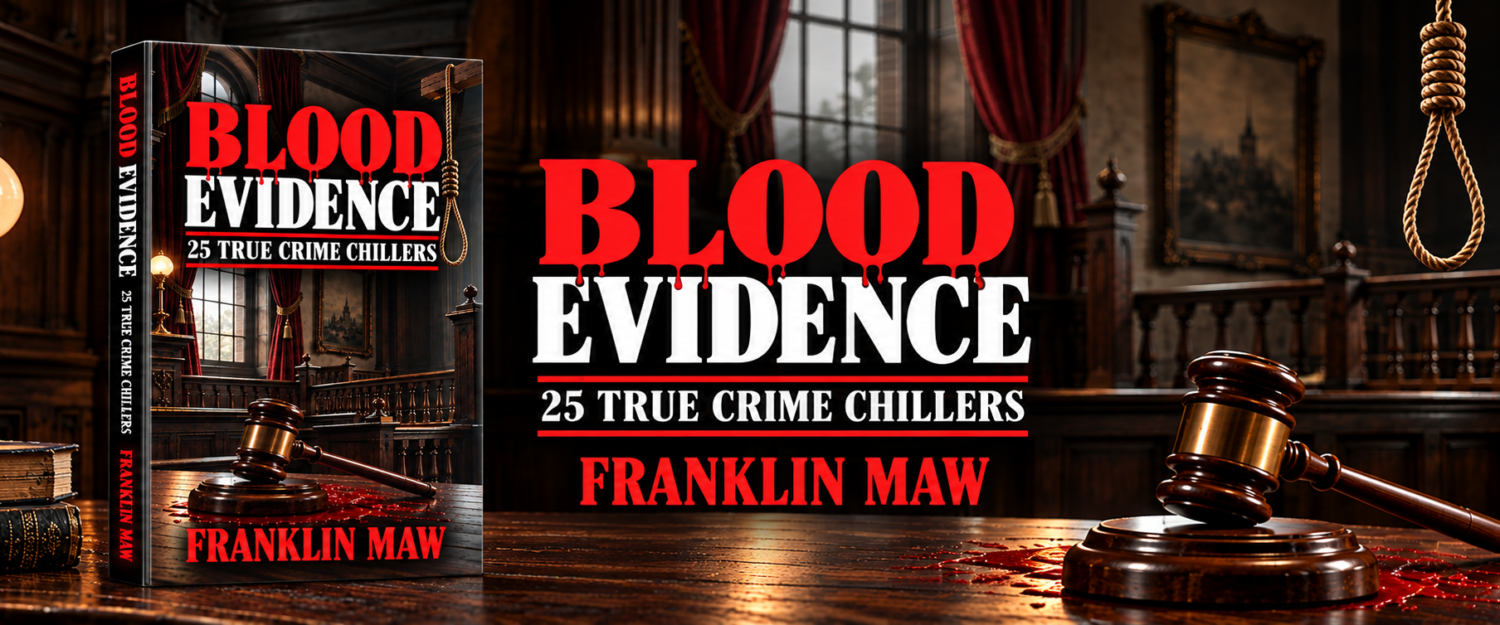
Blood Evidence is what came out of that. Twenty-five cases — some you’ll know, most you probably won’t, all of them cases that earned a place on my desk the way they once earned a place in that shoebox. I didn’t set out to shock anybody. I set out to remember people the world mostly forgot, and to ask the questions that never quite got answered.
I think about that ten-year-old in the library sometimes. He’d be relieved to know I finally got around to it.